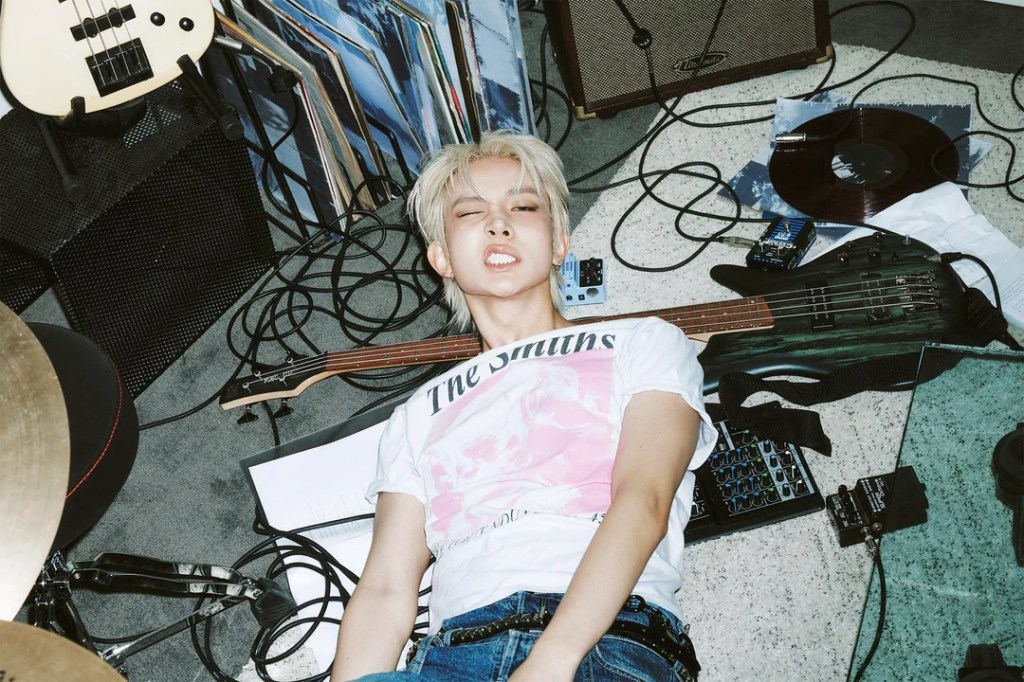
When an artist departs one of K-pop’s biggest groups, the conversation is almost inevitable.
Was it worth it?
The question has followed EVAN ever since he stepped away from ENHYPEN, a group that offered the combination of global recognition, commercial success, and institutional support. For many observers, leaving such a position appeared to be a gamble—one that would inevitably be judged through the lens of his first solo release.
With Ride or Die, EVAN does not deliver answers. Instead, he accomplishes something arguably more important for a debut: he establishes a clear artistic identity.
A solo debut is not designed to validate a career decision. It is meant to introduce an artist on their own terms.
Viewed from that perspective, Ride or Die succeeds.
The track draws from alternative rock, pop-rock, and indie-pop influences, combining nostalgic guitar-driven textures with contemporary production. There is a cinematic quality to its sound, one built around youthful longing, emotional vulnerability, and the search for connection. The result feels familiar enough to resonate with current trends while retaining a distinctly personal atmosphere.
Rather than chasing the polished intensity often associated with modern K-pop title tracks, Ride or Die leans into mood and emotion.
A Song Built Around One Voice
The strongest aspect of Ride or Die is not its production or even its melody. It is its sense of ownership.
The song feels unmistakably tailored to EVAN.
While elements of its sound could theoretically exist within ENHYPEN’s songs, the overall presentation does not feel designed for a group dynamic. Every creative choice—from the production and visual aesthetic to the emotional tone—appears centered around a singular perspective.
That distinction matters.
Many solo debuts struggle to separate an artist from the identity of the group they left behind. Others lean so heavily into reinvention that they lose a sense of authenticity. Ride or Die avoids both pitfalls, striking a balance between familiarity and individuality.
By the end of the track, listeners may not know everything about EVAN as a solo artist, but they have a much clearer understanding of who he wants to be.
The Vocal Question
One of the more common critiques directed at Ride or Die concerns its use of EVAN’s vocals.
For fans familiar with his abilities, the title track may feel surprisingly restrained. The song prioritizes atmosphere and storytelling over technical vocal showcases, leaving some listeners wanting a more prominent display of his range and power.
The criticism is not without merit.
Yet it is also worth considering that not every debut is intended to function as a vocal exhibition. In some cases, establishing an artistic world can be more important than demonstrating every technical strength at once.
That broader picture becomes clearer through Overflow, the project’s second track. There, EVAN’s voice occupies a more central role, revealing the clarity and control that many longtime fans already recognize. Together, the two songs suggest an artist more interested in building a cohesive identity than checking every expected box in a single release.
Establishing a Foundation
The song introduces a visual and sonic language. It defines an emotional tone. Most importantly, it offers a direction.
For years, audiences knew EVAN as part of a collective identity. This debut marks the first substantial glimpse of how he intends to exist outside of it. That does not mean the journey is complete. If anything, Ride or Die feels like the opening chapter of a much larger story. The challenge ahead will be maintaining and expanding this artistic vision across future releases, refining it into something increasingly distinctive.
What we can say everytime we hear the song? We can say that it does not sound like a compromise. It does not sound like a side project. And it does not sound like an artist searching for an identity.
It sounds like an introduction.
And we want to have this introduction on repeat till the next release.
Photos: BE:LIFT
 SINON
SINON 