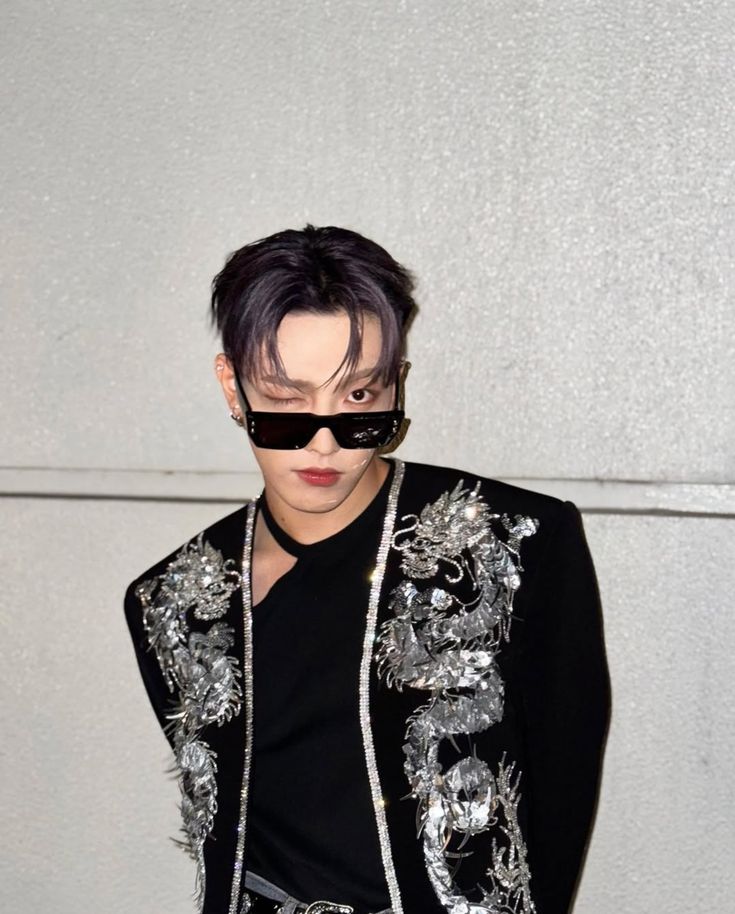
K-pop idols aren’t just musicians—they’re visual storytellers. Every comeback is a concept. Every outfit is a mood. Idols embody a kind of fashion fluidity that transcends genre.
🧵 Hongjoong (ATEEZ)
The Balmain prince of K-pop. Hongjoong blends punk, preppy, and DIY flair—customizing jackets, layering textures, and accessorizing like it’s an art form. His fashion is fearless, emotional, and deeply personal.

👖 Manon (KATSEYE)
A denim chameleon with Ghanaian–Italian roots. Manon mixes baggy jeans, bralettes, and waist beads with vintage tees and sharp brows. Her style is fluid, global, and unapologetically feminine.

🎩 V (BTS)
The king of quiet luxury. V’s style blends old-school elegance with dark academia—think pearls, tailored suits, and vintage cardigans. He’s redefined masculine fashion with softness and edge.

💎 Lisa (BLACKPINK)
Global it-girl energy. Lisa’s style is bold, playful, and ever-evolving—from streetwear to couture. She’s a muse, and her accessory game has sparked global trends.

🌍 Global Influence, Local Remix
K-pop fashion isn’t confined to Korea. It’s a global remix of style codes:
- In New York: Fans channel idol energy with thrifted Y2K pieces and structured layering.
- In Paris: K-pop’s love for tailoring and accessories meets French minimalism.
- In Jakarta, Manila, and LA: Streetwear gets a soft-glam twist, inspired by idol airport looks and concert fits.
🧠 Why It Resonates
K-pop fashion speaks to Gen Z’s core values:
- Fluidity: Gender-neutral silhouettes and emotional styling
- Narrative: Outfits that tell a story, not just follow a trend
- Identity: Fans use fashion to mirror their biases, moods, and eras
It’s not just about looking good—it’s about feeling seen.
 SINON
SINON 